
You learn what “pretty” means before you even know what race is. It starts with the dolls you get—usually straight-haired, sometimes wavy, always blond, with blue eyes and fair skin. Those dolls were called cute, just like the girls who looked like them. As a little girl, I knew I didn’t look like those dolls. No one complimented my coily hair, my twist-outs, or my braids. No one praised my beautiful brown skin, even though it was always perfectly moisturized (thank you, mom). No one told me my deep, dark eyes were lovely. And I always asked myself why that was.
I did not fit the blueprint. The obvious and specific blueprint that is still very much relevant is what we call “pretty”, “put together”, and “professional”.
The blueprint that we are rooted in whiteness. And the closer you were to it, the more these rules seemed to reward you. I remember testing this theory out when applying for a job. I noticed that when I used a resume with a photo of me with braids or with my hair obviously coily, I got fewer responses. But when I used a picture of me with my fresh silk press, I got more responses, mostly excited. Because people, whether they realize it or not, have racial bias.
An interesting study, called the Implicit Association Test, was a tool developed by researchers at Harvard University that measures automatic associations. The results have actually shown a consistent pattern, which is a bias that favors whiteness, even among people who consciously reject racist or colorist beliefs. Dropping colorist in there because even among the brown and black people, there is an obvious bias to lighter skin tones and looser textured hair.
Which makes sense since it’s conditioned. People subconsciously link whiteness to “good”, “smart, “beautiful,” and “acceptable”. And this is even when we think we’re being objective, we’re often repeating what we’ve been exposed to and taught to prefer. What we are biased towards.
And these biases don’t stay abstract. They shape how girlhood is experienced. As a black woman, I often grew up learning that beauty had to be negotiated. I felt the need to compensate by making sure I was likable, soft-spoken, and extremely polite so I would be valued.
Girlhood for many black girls and girls of color becomes less about simply being and more about becoming, adjusting, refining, and translating yourself into something that is already understood as acceptable.
Hair becomes more than hair, even though you have other people hooting and hollering that it is “just hair”. It becomes neatness, professionalism, and respect. Real experience, when I wear a lighter-toned, blond-ish wig, I get praised left and right. I come with my natural hair and color, crickets…
Clothing isn’t just self-expression; it has become strategic, calculated. Because God forbid I wear baggy jeans, Timberlands, and a tank top and be called “hood” and receive bombastic side eyes, while a white person is often seen as edgy, fashionable, and outgoing, wearing the exact same style.
The way you speak becomes part of an equation to calculate if you are worthy to be respected. For many black girls, this means learning early on to speak naturally to be taken seriously. You soften, adjust, and code-switch. And it is not to say this is inauthentic to do. But because we understand what the consequences are if you don’t.
Even the labels used to describe women work the same way. Fitting the “high-end” aesthetic is often associated with softness, wealth, elegance, and femininity. But it becomes more interesting when you start asking what society actually considers feminine in the first place.
Because the version of femininity we constantly see praised didn’t pop out of nowhere. It was shaped around whiteness, wealth, and respectability. A very specific image of womanhood: soft-spoken, delicate, polished, effortless.
And black women don’t fit the default. We change ourselves to become more digestible to mainstream standards. We straighten our hair, soften our accents, embrace luxury, but in a restrained way so as not to come across as “doing too much” and have to look attractive, but never threatening.
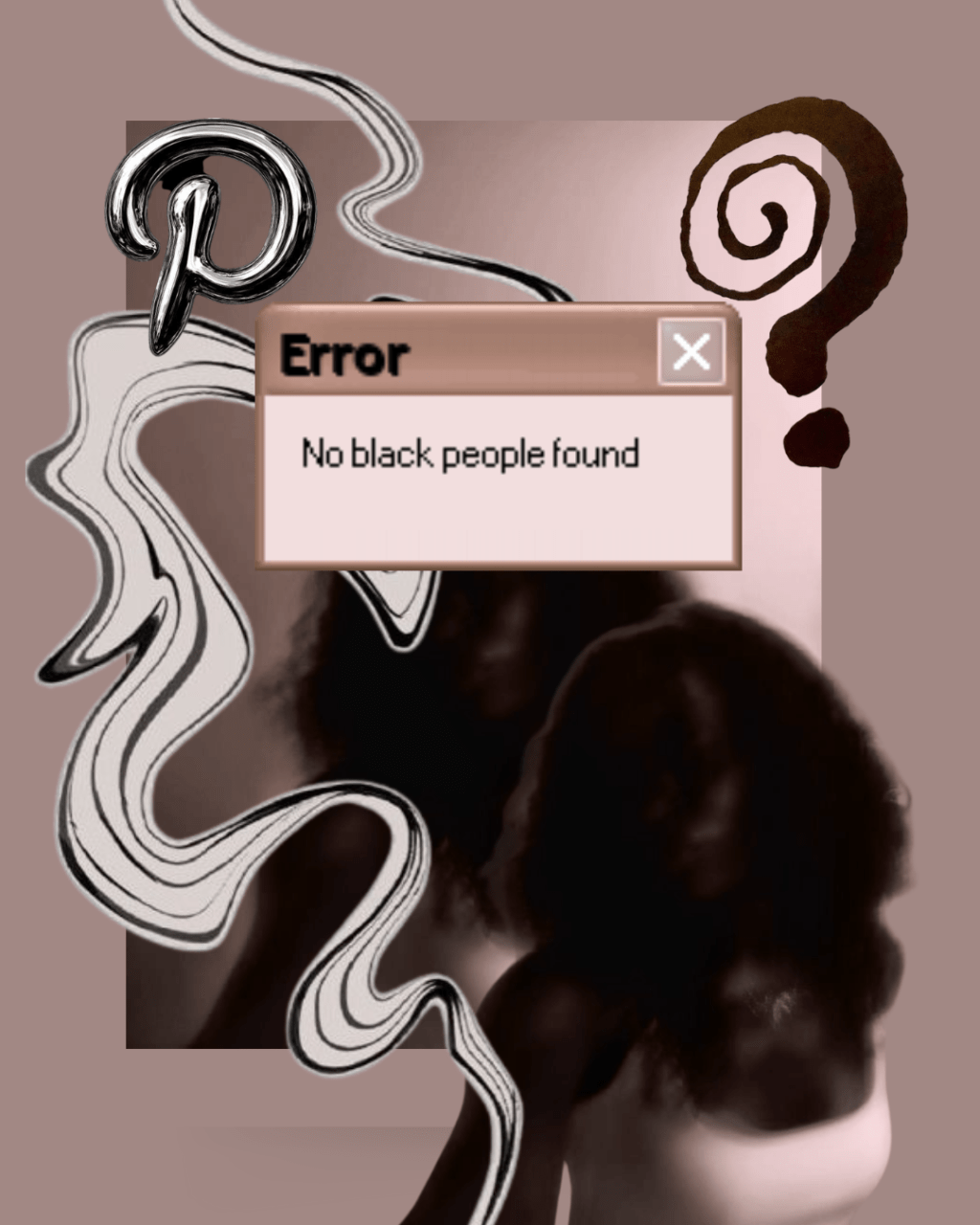
We see it on social media. Pinterest, TikTok, and podcasts. Hyper-feminine influencers often frame womanhood as self-improvement through beauty, discipline, desirability, and luxury. But the image attached to that lifestyle is heavily shaped by white aesthetics.
I could go on and on. But to bring it back to the core, the standard was never neutral; it was built. Built throughout history, class, politics, power, beauty, and media. Crafted meticulously until certain women became the default of femininity, of womanhood. All white women of color were taught to earn those things and mold themselves as close as possible to the default.
So no, it was never “just hair”.
Or “just fashion”.
Or “just the way you speak”.
And perhaps that’s why so many Black women grow up hyperaware of themselves. Because femininity was never handed to us as something assumed. It is because something many of us learned to negotiate, learned to fit into, as close as we can.
Whiteness became the blueprint. And everyone else just had to learn how to survive around it.
And I guess there’s a quiet grief in realizing how often you were taught to edit yourself just to be seen as beautiful. To be seen as worthy.
But my gorgeous, lovely ladies. We are amazing. And maybe we have to start realizing that true freedom begins when you stop shaping yourself to be acceptable and start allowing yourself to exist fully, visibly, and without apology. Because we made it, WE are magnificent. The world just needs time to catch up to us.
With love,
The Awkward black girl.


 Diaries of an Awkward Black Girl
Leave a comment